ScoreFlow
A real-time judging platform for dance competitions — live scoreboards, multi-round scoring and role-based access for organizers, judges and competitors.
- Next.js 16
- React 19
- FastAPI
- AWS CDK
- DynamoDB
- WebSocket
- Cognito

I design, build and run cloud systems on AWS and Google Cloud for Denver businesses: serverless apps, migrations off old servers, secure hosting and cloud bills under control. The systems I run today include 60+ Lambda functions and 40 database tables across production and QA.
Nobody is sure what each service costs or why. A review finds idle resources and oversized setups, and serverless designs cost little when traffic is low.
Traffic spikes, a single server or manual fixes at midnight. A serverless or managed setup scales on its own and alerts you before customers notice.
A move to AWS or Google Cloud is planned and tested in a copy first, so the switch is quick and can be rolled back.
Changes go straight to production by hand. Infrastructure as code, a QA environment and automatic deploys make every update repeatable.
A written review of your current setup: costs, risks, security and what to change first.
Lambda, API Gateway and DynamoDB on AWS, or Cloud Run on Google Cloud, so you pay for use instead of idle servers.
Websites and apps on S3 and CloudFront with HTTPS, caching and redirects handled at the edge.
User sign-in with Cognito, transactional email with SES and file storage set up correctly from day one.
Everything defined with AWS CDK or CloudFormation, so environments can be rebuilt and reviewed instead of clicked together by hand.
CloudWatch alarms and logs, so problems surface before customers report them.
I pick the platform that fits your team, your current tools and your budget, not the one with the most features.
Where most of my production work runs: serverless apps, APIs, real-time WebSockets and static sites on CloudFront. Best for custom apps that need to scale.
A natural fit when your team already works in Google Workspace or wants Google's AI models like Gemini, with Cloud Run for apps and AppSheet for no-code tools.
For simpler sites and front ends that don't need their own cloud architecture: quick deploys and little to maintain.
We look at what you run today, what it costs and what is causing trouble.
A written plan with the target architecture, the migration steps, the expected monthly cost and an estimate for the work.
Everything is built and tested in a separate QA environment before it touches production.
A planned cut-over with a way back, timed to stay out of your busy hours.
Alarms, documentation and access handed over to you, plus ongoing support if you want it.
Serverless platforms running on AWS today.

A real-time judging platform for dance competitions — live scoreboards, multi-round scoring and role-based access for organizers, judges and competitors.


A full business platform for a dance studio — online payments, class bookings, automated email and an SEO-tuned site, backed by a 60+ endpoint serverless API.


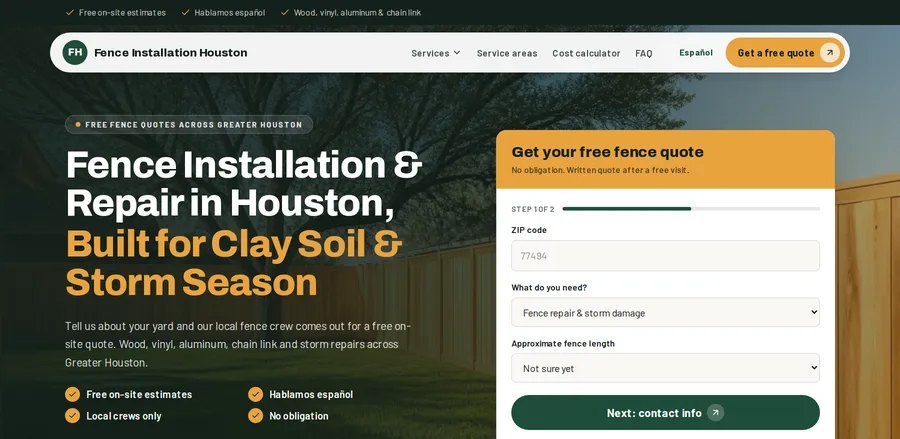
A bilingual (EN/ES) lead-generation site for fence installation and repair across Greater Houston: 84 pages of city, service, cost and permit guides, a fence cost calculator and a two-step quote form that delivers every request by email. It brought in its first real customer request two weeks after launch.


A premium, high-converting event site for a 3-day Denver bachata weekender — ticket tiers, Stripe checkout and a cinematic, animated experience.

Helps you choose where your website, apps and data run, sets them up securely and keeps the monthly bill under control. For most small businesses that means fewer surprises: no server to patch, automatic scaling and alerts when something breaks.
Usually, for business apps with uneven traffic, because you pay per request instead of for an idle machine. For steady, heavy workloads a server can cost less. I compare both with your real numbers before recommending one.
Neither wins for everyone. AWS has the widest range of services and is where most of my production systems run; Google Cloud fits teams already on Google Workspace or using Gemini. I recommend one based on your team, your tools and your budget.
Yes. I copy and test everything in a separate environment first, then switch over with a way back if anything looks wrong, and redirect old addresses so you keep your search traffic.
API keys and secrets stay on the server, each part gets only the permissions it needs, production and test environments are kept apart, and sign-in uses managed services like Cognito instead of home-made logins.
Yes. Monitoring, cost reviews, updates and new features, from the same engineer who built the system.
Send a few details and I'll get back to you — usually within a day.
hnavasystems@gmail.comBook a callOr chat with my AI agent above.